
What Is Spinal Intelligence?
Have you noticed how noisy the conversation around the body has become?
On social media, we’re told we need to regulate our nervous systems. That cortisol is bad—except when it’s essential for health. That strength training is non-negotiable—but only if your spine is supple. That you should move in every direction—but also prioritize strength. Or flexibility. Or both, but only in very specific ways, or else everything will fall apart.
It can be… a lot.
This flood of information often leaves people feeling overwhelmed and unsure about what they actually need in order to feel strong, calm, coordinated, and capable in their bodies.
Here’s the good news:
Anything you do with your body affects your nervous system, and anything you do that impacts your nervous system affects your body.
These two systems are deeply intertwined. Together, they allow you to wake from a dead sleep and leap out of bed in an emergency—or to let your guard down (figuratively and literally), laugh, and settle into a moment of connection with friends.
Spinal intelligence is a way of working with this relationship—rather than trying to manage it in pieces.
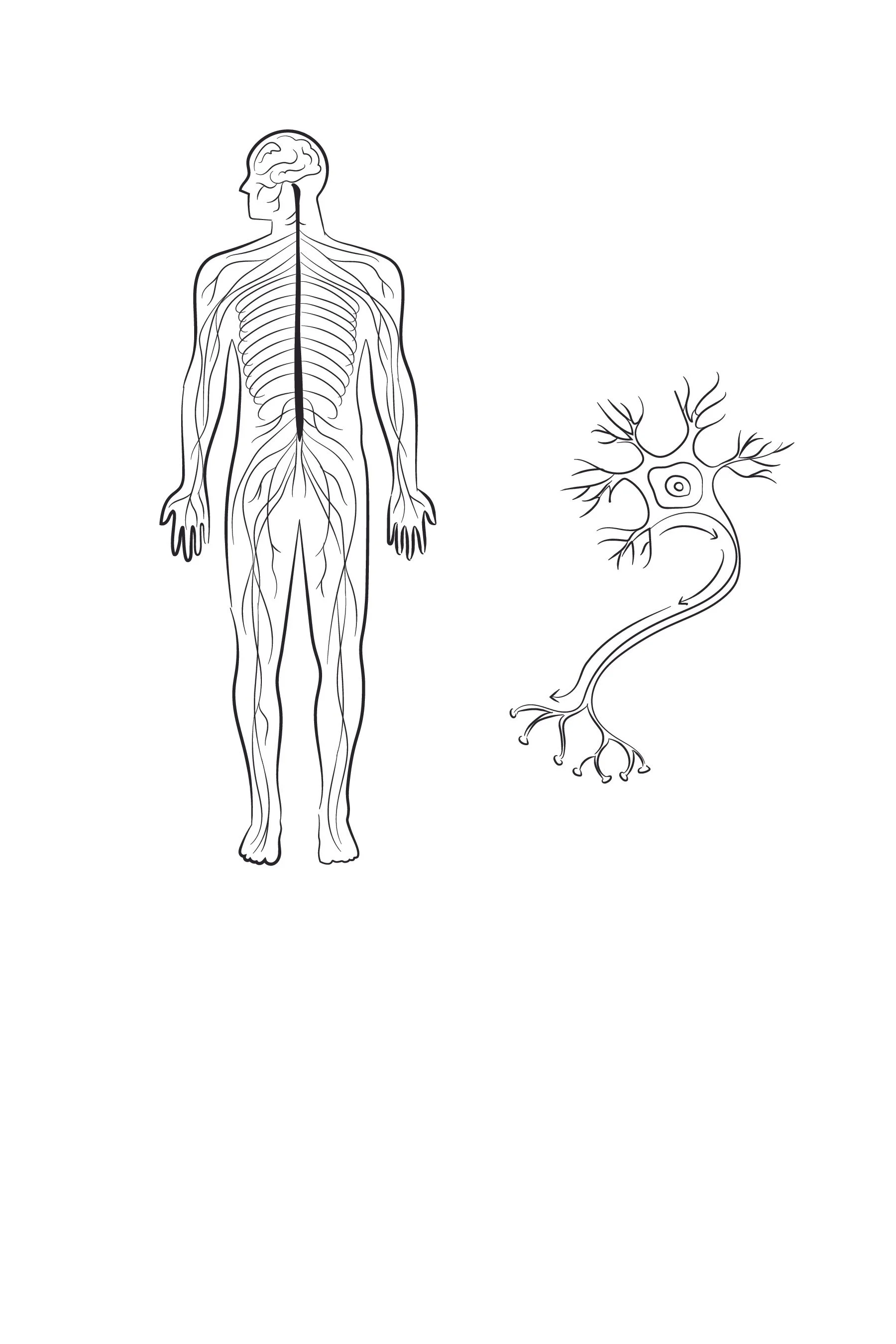
The Spine: Where Body and Nervous System Meet
If you remember high school biology, you may recall that the central nervous system is made up of the brain and spinal cord. Nerves branch out from the spinal cord, forming a communication superhighway that carries information from the body to the brain and from the brain back to the body.
When you imagine your spine, you might picture its familiar S-shaped curve, beginning at the base of the skull and ending at the pelvis. But the spine is much more than a stack of bones.
The spine:
Houses and protects the spinal cord
Serves as an attachment point for muscles, ligaments, and tendons
Anchors the rib cage and protects vital organs
Connects the upper and lower body
Structurally and neurologically, the spine is central. It is quite literally where movement, sensation, and perception intersect.
Try the practice below. See if it shifts how you feel and how you sense your self.
What Does “Spinal Intelligence” Actually Mean?
According to Merriam-Webster, intelligence is the ability to learn, understand, and apply knowledge.
Spinal intelligence doesn’t mean the spine has a mind of its own. Rather, it refers to your ability—your whole self, mind and body—to develop awareness of how your spine is structured, how it moves, and how it supports you in action.
This includes:
Learning the basic anatomy of the spine
Sensing different regions of the spine
Noticing how spinal position and movement influence balance, strength, breathing, and coordination
In other words, spinal intelligence isn’t just about information—it’s about felt understanding.
It’s the difference between knowing about your spine and actually sensing it as you move.
Why Spinal Awareness Matters
The simple act of sensing—paying attention to different aspects of yourself—creates a clearer internal “map” in the brain.
While spinal intelligence won’t directly help you land a new job, buy a house, run faster, or carve a six-pack, it will:
Improve overall body awareness
Increase confidence and trust in movement
Support a calmer, more adaptable nervous system
Make strength, flexibility, and coordination feel more connected
Spinal intelligence becomes an entry point to movement that feels integrated rather than forced.
It’s what allows you to:
Shift your weight smoothly
Lift heavy objects with more awareness
Rotate your body in space
Sense how your torso responds when weight moves through different parts of your feet
Catch yourself when you stumble
That last one isn’t accidental—many reflexes, including the stumble reflex, originate in the spinal cord.
Spinal Intelligence as a Movement Framework
At its core, spinal intelligence is the integration of mind and body using a central reference point: the nervous system, anchored through the spine.
Rather than asking:
Should I focus on strength or flexibility?
Do I need more mobility or more stability?
Is this a nervous system issue or a physical one?
Spinal intelligence offers a different question:
How is my spine sensing, responding, and organizing movement right now?
From there, strength, mobility, coordination, and regulation stop being competing goals—and start working together.
Want to Explore Spinal Intelligence More Deeply?
Spinal intelligence is the foundation of my upcoming book, Spinal Intelligence, as well as future courses, workshops, and practices designed to help you move with more clarity, confidence, and connection—whether you’re lifting weights, exploring pole or aerial work, or simply moving through daily life.
If you’d like to be the first to hear about the book release, early access opportunities, and related offerings, you can join the waitlist below.