
Unlocking Hip & Low-Back Flexibility: Start With Your Pelvic Floor
“My hips feel tight.”
“My low back is stiff.”
“I can’t figure out how to go deeper into my straddle.”
If any of these sound familiar, you’re in good company. Stiffness through the pelvis and low back shows up in everyone—from desk workers to parents to pole dancers to runners.*
*Runners usually don’t care about their straddle, unless they’re also pole dancers. I speak from first-hand experience.
There are endless ways to address each of these issues (and if you scroll TikTok long enough, you’ll find even more). But what if there was one simple, universal starting point that helped with general hip and low-back mobility? And what if it didn’t require pretzel-like stretching or complicated routines?
Enter: the pelvic floor.
Yes, Men Have a Pelvic Floor Too
If you’re a male reader and are tempted to skip this—don’t. You also have a pelvic floor, and it’s just as capable of contributing to hip and low-back tightness. (Check the image below if you need convincing.)
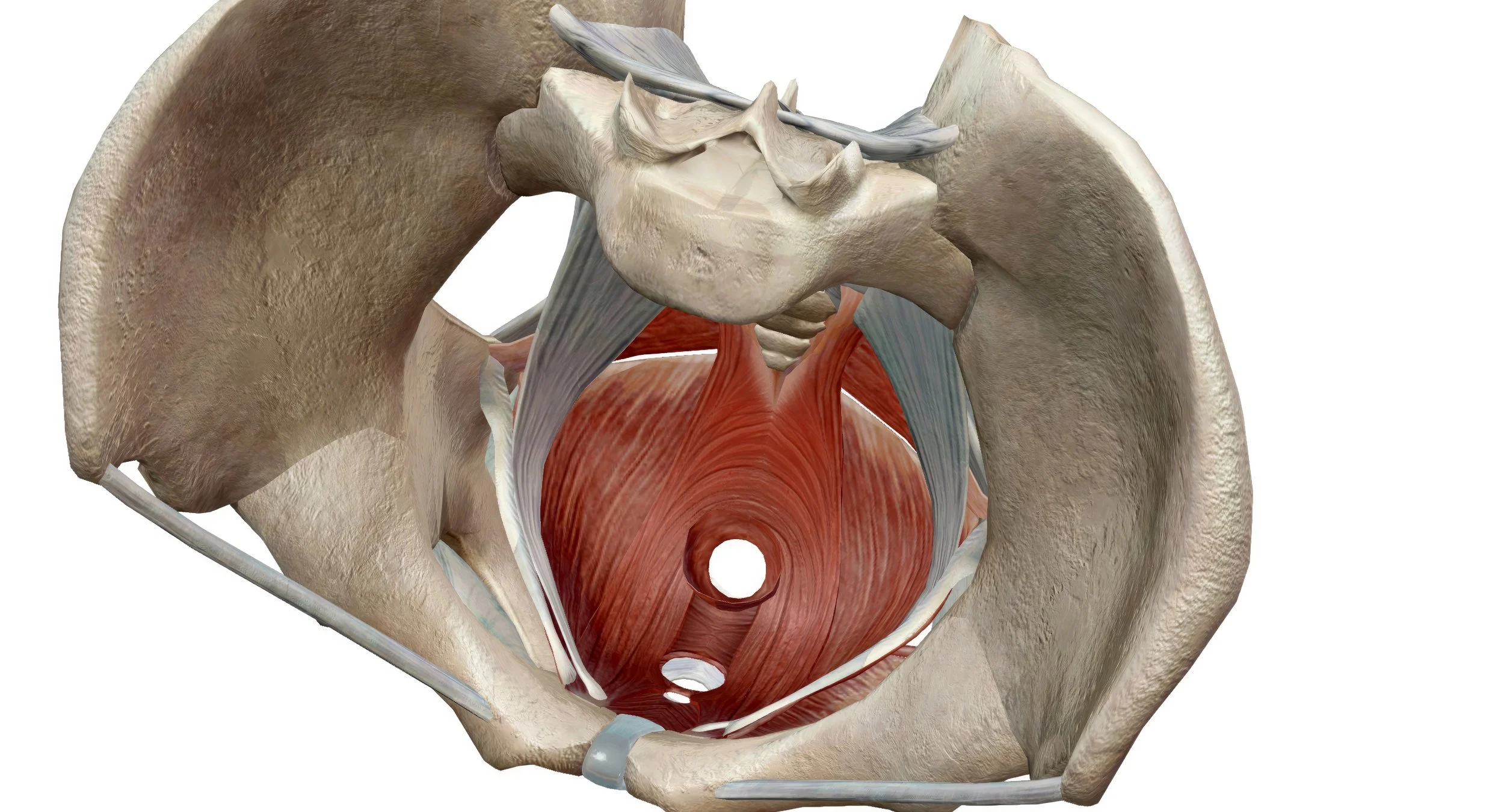
Pelvic floor, aerial view. This appears to be a female structure, but the male structure looks similar.
Before we dive into how the pelvic floor affects movement, let’s start with a simple analogy.
A Quick Thought Experiment
Make a loose fist with both hands. Stack your left fist on top of your right, like you’re wringing out a towel.
Gently move your hands back and forth.
How hard is it?
Now imagine you’re squeezing something between your fists. Really tighten around the imaginary object.
Try moving again.
Easier or harder?
For most people, the second version is significantly harder. When the thing in the middle is gripping, everything around it loses mobility.
Now look at the picture of the pelvic floor.
Where is it located?
Right in the center of your pelvis.
If it’s perpetually gripping or bracing, how well do you think your hips or low back will move?
Not very well. In fact, after working with people of all ages for 23 years, here’s what I’ve learned:
Improve pelvic floor movement, and the low back and hips almost always feel less stiff—and move more fluidly.
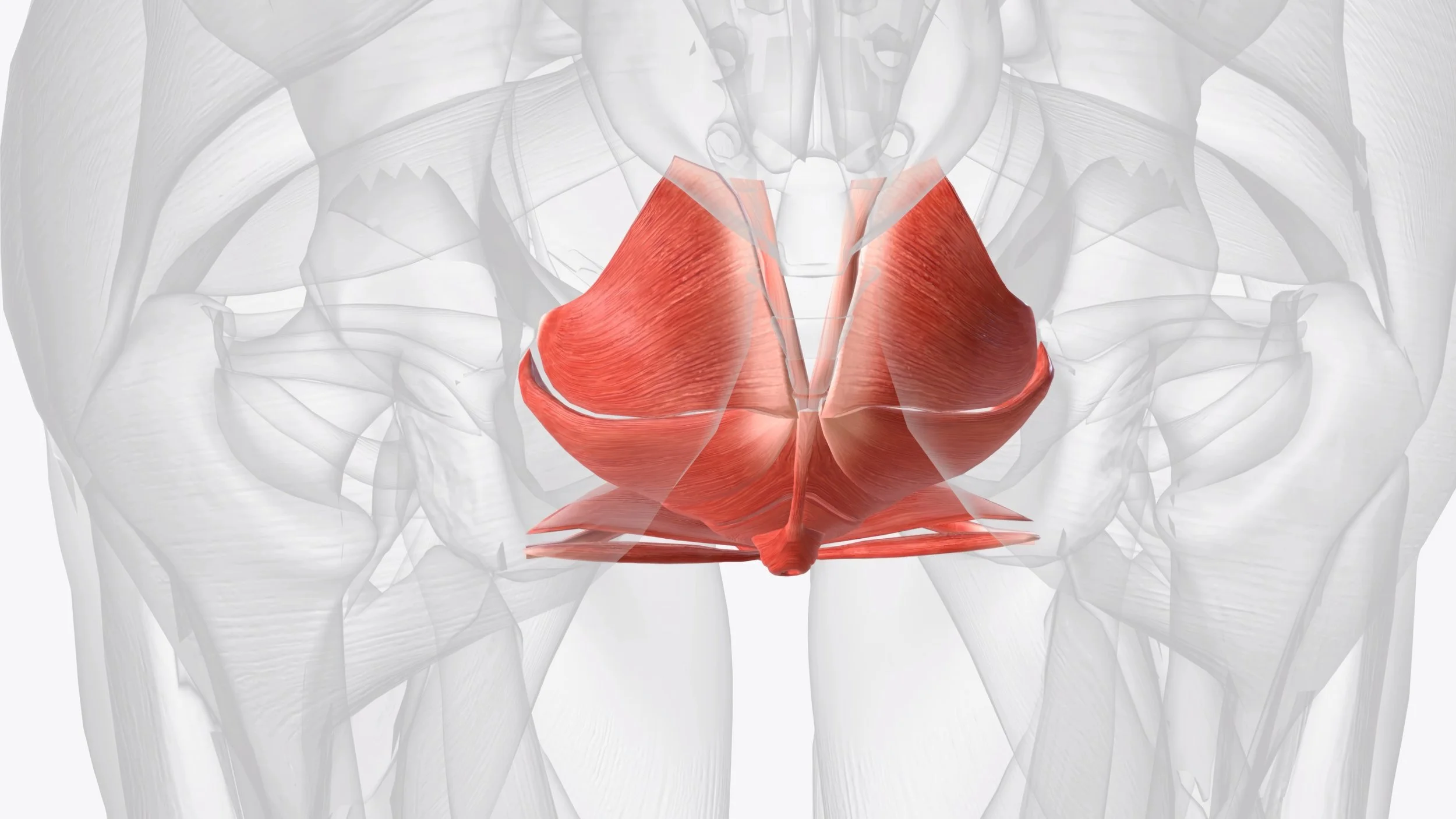
Interconnection of the pelvic floor and hips
First Step: Locate Your Pelvic Floor
This is easier than it sounds.
Sit down.
Feel the two bones at the bottom of your pelvis—your sitting bones.
Imagine pulling a tail between your legs. Your pelvis rolls back. You’ll naturally stop when your tailbone (coccyx) is tucked fully under.
That’s the back of your pelvic floor.
Now move the tail away—rolling your pelvis forward until the bone at the front (your pubic symphysis) tips downward toward the chair.
That’s the front of your pelvic floor.
Everything between those two points = your pelvic floor muscles.
How Do We Get the Pelvic Floor to Move?
Return to your two stacked fists.
Squeeze tightly.
Then imagine the object between them expands slightly—you loosen the grip.
Then it contracts—you tighten again.
Continue for a few seconds.
Now translate this to the body:
When you inhale, your pelvic floor expands.
When you exhale, it contracts.
It’s a rhythmic cycle—unless you’re unconsciously gripping all the time.
This means one of the simplest ways to influence flexibility through the hips and low back is through your breath.
Try This Quick Test
Stand up.
Reach toward your toes.
Do the breathing exercise in the video below.
Reach again.
Did anything change?
Breathing creates space.
And space is what your body needs to move.
Other Ways to Create Space
Breath is step one.
Step two is movement—specifically, movements that:
Mobilize the pelvic floor
Coordinate the rest of the body with the pelvis
Change how your arms, legs, and feet load the system
Your limbs influence the pelvis more than you might think. Your feet alone can change how easily you access pelvic floor movement.
In other words: intentional, well-designed movement = more freedom.
Try These Two Exercises
Below, you’ll find two exercises that target pelvic floor movement and whole-body coordination.
Want More Flexibility Tips?
Download the free flexibility PDF to explore simple, effective ways to create space in your hips, pelvis, and low back.
Free your pelvic floor, and who knows what flexibility you might unlock.